Navigating Kitchen Knife Selection for Enhanced Safety: An Informational Guide
In an increasingly interconnected world where home cooking and culinary exploration continue to thrive, understanding the fundamentals of kitchen safety remains paramount. As we look towards 2026, the emphasis on efficient and safe culinary practices endures, making the selection of appropriate kitchen tools a critical aspect of any well-managed kitchen. Among these tools, knives stand out as indispensable instruments, yet their misuse or improper selection can pose significant risks. This educational guide aims to demystify the process of choosing kitchen knives, focusing specifically on elements that contribute to enhanced safety, rather than performance or aesthetics alone. By understanding the design principles, materials, and maintenance requirements, individuals can make informed decisions that promote a safer cooking environment for themselves and their households.
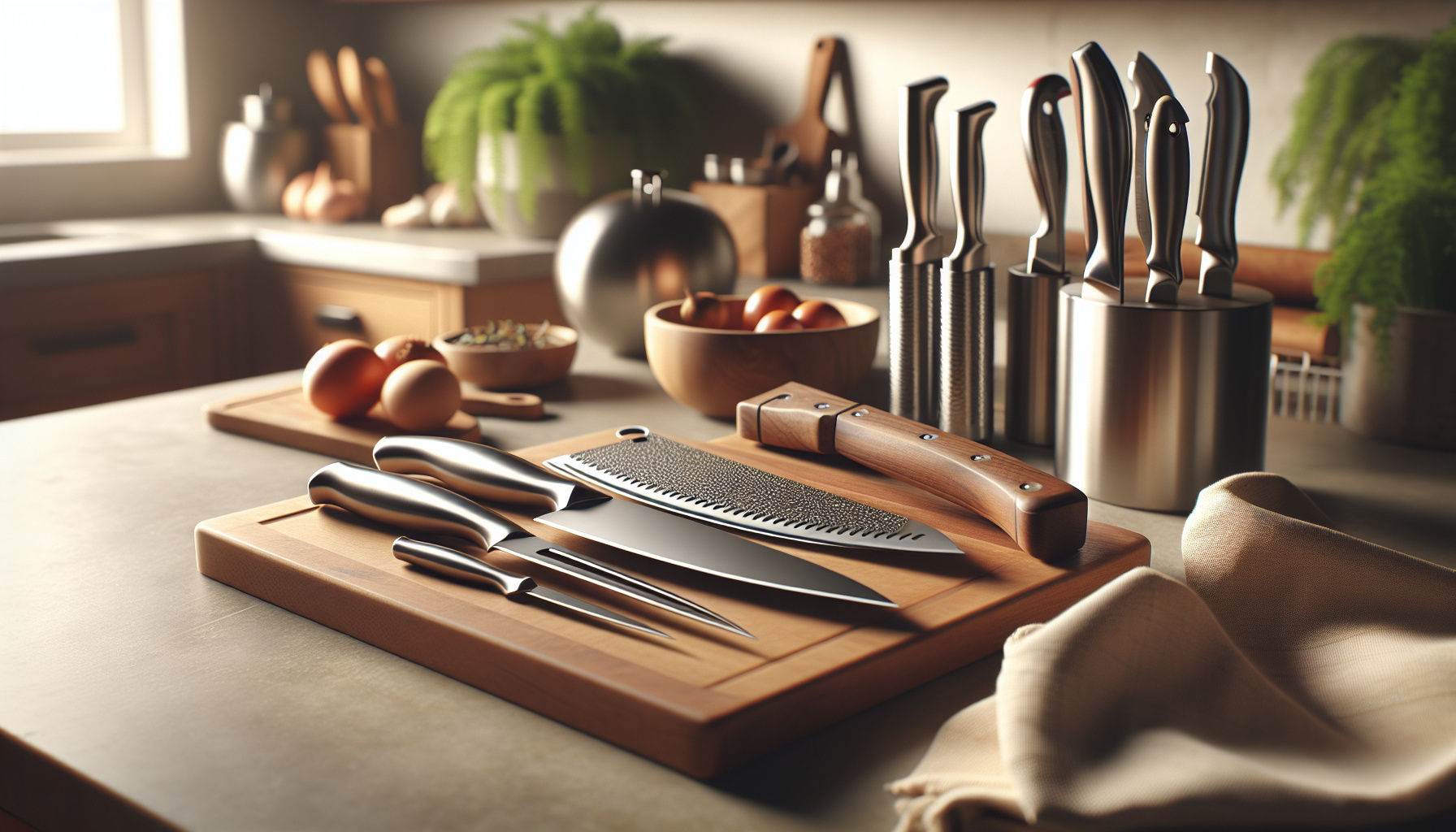
Ensuring safety in the kitchen begins long before the first ingredient is prepped; it starts with the careful selection of tools. Kitchen knives, while essential, can be sources of injury if not chosen and maintained with caution. This comprehensive guide explores the various facets of kitchen knives, emphasizing characteristics that directly impact user safety and promote effective, risk-reduced culinary work.
Practical Guidance for Safe Kitchen Knife Selection
Choosing a kitchen knife involves more than just aesthetics or perceived cutting power. A truly safe knife is one that is appropriate for its intended task, comfortable to hold, well-maintained, and designed with user protection in mind. Understanding the components and types of knives can empower individuals to make choices that prioritize safety.
Understanding Blade Material and Its Impact on Safety
The material from which a knife blade is forged significantly influences its performance, maintenance requirements, and ultimately, its safety. The primary blade materials encountered are stainless steel and high-carbon stainless steel.
- Stainless Steel: Known for its resistance to corrosion and rust, stainless steel blades are relatively easy to maintain. Their primary safety benefit lies in their hygiene; they do not readily react with acidic foods or harbor rust, which can introduce contaminants or compromise blade integrity over time. However, traditional stainless steel may require more frequent sharpening to maintain a keen edge, and a dull knife is often considered more hazardous than a sharp one due to the increased force required for cutting, raising the risk of slippage.
- High-Carbon Stainless Steel: This material combines the corrosion resistance of stainless steel with the edge retention and hardness of high-carbon steel. Knives made from this material can achieve and hold a sharper edge for longer periods. From a safety perspective, a consistently sharp blade reduces the effort needed for cutting, minimizing the chance of the blade slipping off food and causing injury. The robustness of high-carbon stainless steel also contributes to blade stability during use.
Regardless of the material, a well-fabricated blade will exhibit uniformity in its finish, without visible flaws or irregularities that could compromise its strength or cutting performance.
Blade Edge Types and Their Appropriate Safe Use
The design of a knife's edge dictates its cutting action and suitability for various foods, directly impacting user safety.
- Straight Edge (Plain Edge): This is the most common type of edge, found on chef's knives, paring knives, and utility knives. It provides a clean, precise cut through food. A sharp straight edge is crucial for safety as it allows the knife to bite into the food without skidding, requiring less downward pressure. This precision reduces the likelihood of the blade veering off course.
- Serrated Edge: Characterized by a series of scallops or teeth along the blade, serrated edges are designed to cut through foods with tough exteriors and soft interiors, such as bread or tomatoes, without crushing them. The sawing motion created by the serrations can effectively grip and tear through surfaces. For safety, it is important to recognize that serrated blades can be more aggressive and less precise for certain tasks, and their sharp points can easily snag. Care must be taken to guide them firmly and steadily.
Blade Shapes and Knife Types for Specific Tasks
Different knife shapes are optimized for particular tasks, and using the correct knife for the job significantly enhances safety by providing better control and efficiency.
- Chef's Knife: This versatile knife, typically 6 to 12 inches long, features a broad, curved blade that tapers to a point. Its design facilitates a rocking motion for chopping and dicing various ingredients. The curvature allows the tip to remain in contact with the cutting board while the heel lifts, providing a stable pivot point. Using a chef's knife for its intended purpose reduces the risk of injury associated with attempting complex cuts with less suitable tools.
- Paring Knife: Small (2-4 inches), with a short, rigid blade, the paring knife is ideal for precise, delicate tasks like peeling, trimming, and intricate garnishing. Its compact size offers superior control for off-board work, reducing the risk of accidental cuts often associated with larger blades in confined spaces.
- Serrated Utility/Bread Knife: Longer than a paring knife, often 6-8 inches, with a serrated edge, this knife is excellent for cutting sandwiches, baguettes, or larger fruits and vegetables with tough skins. Its serrations prevent crushing, ensuring a clean cut. For safety, the length demands ample clear space for its sawing motion.
- Santoku Knife: A Japanese-style all-purpose knife, often characterized by a flatter blade profile than a chef's knife and typically featuring a Granton edge (indentations on the blade to prevent food from sticking). Santoku knives are well-suited for chopping, dicing, and mincing with a downward cutting motion. Their balance and slightly shorter length compared to many chef's knives can offer a feeling of increased control for some users.
- Boning Knife: With a thin, often flexible blade, usually 5-7 inches, boning knives are designed to separate meat from bone and trim fat. The flexibility allows the blade to navigate contours precisely, minimizing waste and, crucially, reducing the risk of the blade slipping and cutting into flesh unnecessarily.
Handle Design and Material: The Foundation of Grip Security
The handle is the primary point of contact between the user and the knife, making its design and material critical for safety.
- Ergonomics: A well-designed handle should fit comfortably and securely in the hand, minimizing fatigue and providing a firm, non-slip grip even when hands are wet or greasy. Handles that are too small, too large, or have sharp edges can lead to discomfort, loss of control, and increased risk of accidents. Contoured handles that promote a natural grip are generally safer.
- Material: Handle materials vary widely, including wood, synthetic plastics (like POM, polypropylene), and composite materials.
- Wood: Offers a traditional aesthetic and can provide a good grip when dry. However, wood can be porous, absorbing moisture and harboring bacteria if not properly sealed and maintained. It may also become slippery when wet.
- Synthetic Materials: Often preferred for their durability, hygiene, and slip-resistant properties. Many synthetic handles are designed to be non-porous, making them easy to clean and sanitize. Texturized or rubberized sections further enhance grip security, especially in a busy kitchen environment.
- Tang: The tang refers to the portion of the blade that extends into the handle.
- Full Tang: The blade extends the full length and width of the handle, typically sandwiched between two handle scales. This construction provides superior balance, strength, and durability. A full tang knife is generally considered safer because the handle is securely anchored, reducing the risk of the blade separating from the handle, which could be extremely dangerous.
- Partial Tang: The blade extends only partway into the handle. While lighter, partial tang knives may not offer the same level of balance or long-term durability as full tang versions, potentially leading to instability or breakage over time if not well-constructed.
Weight and Balance: Contributing to Control and Reducing Fatigue
The overall weight and balance of a knife significantly affect its usability and, by extension, safety. A well-balanced knife feels like an extension of the hand, providing better control during cutting tasks. The balance point is often where the blade meets the handle; a knife that feels neither too blade-heavy nor too handle-heavy is generally easier to maneuver. An imbalanced knife can cause undue strain on the wrist and hand, leading to fatigue and potentially compromised control, increasing the risk of accidents.
Long-Term Considerations for Kitchen Knife Safety
Safety with kitchen knives extends beyond initial selection. Ongoing maintenance, responsible usage, and awareness of inherent limitations are crucial for sustained safety.
Essential Maintenance for Sustained Safety
- Cleaning: Always clean knives immediately after use, preferably by hand. Dishwashers can cause blades to dull prematurely by knocking against other items, and the harsh detergents can damage handles. Hand washing ensures the blade is clean and free of food debris that could harbor bacteria or obscure the cutting edge. Always wipe the blade away from the body and dry thoroughly to prevent rust and maintain hygiene.
- Sharpening and Honing: A sharp knife is a safe knife. This adage holds true because a sharp blade requires less force to cut, reducing the chance of slippage.
- Honing: This process uses a honing steel (or rod) to realign the microscopic edge of a blade that has bent during use. Honing should be done frequently, ideally before or after each use, to maintain the edge's integrity.
- Sharpening: This involves removing a small amount of metal from the blade to create a new, sharp edge. Sharpening is typically done less frequently than honing, using whetstones, pull-through sharpeners, or professional sharpening services. Regularly sharpening dull knives restores their cutting efficiency and, critically, their safety.
- Safe Storage: Proper storage protects both the knife and the user.
- Knife Blocks: Store knives with the blade facing downwards, keeping them secure and preventing accidental contact with the edge.
- Magnetic Strips: Mount knives securely to a wall-mounted magnetic strip. Ensure the strip is strong enough to hold the knives firmly and that they are placed out of reach, especially from children.
- In-Drawer Sheaths/Organizers: If storing in a drawer, use individual blade guards or a dedicated drawer organizer to prevent blades from rattling against each other (which dulls them) and to protect hands reaching into the drawer.
User Responsibilities and Safe Cutting Practices
Even with the safest knife, user behavior is paramount. Adhering to fundamental safety practices significantly mitigates risk.
- Proper Cutting Techniques: Employ the "claw grip" for the non-dominant hand, curling fingertips inwards and using knuckles as a guide against the flat side of the blade. This protects fingertips from accidental cuts.
- Stable Cutting Surface: Always use a stable cutting board that does not slip on the countertop. A damp cloth or non-slip mat underneath the board can prevent movement.
- Situational Awareness: Be aware of your surroundings, especially when moving with a knife. Carry a knife with the blade pointing down and close to your side, announcing your presence if moving through a crowded kitchen. Never leave a knife submerged in murky dishwater where it cannot be seen.
- Never Catch a Falling Knife: It is an instinctive reaction, but attempting to catch a falling knife is extremely dangerous. Step back and let it fall.
- Educating Household Members: Ensure everyone in the household, particularly children, understands basic knife safety rules, including proper handling, usage, and storage.
Limitations and Inherent Risks
Despite best practices, knives inherently carry risks. Understanding these limitations is part of comprehensive safety awareness.
- Dull Knives: As mentioned, a dull blade requires excessive force, increasing the risk of the knife slipping off tough ingredients.
- Improper Grip: A loose or incorrect grip can lead to loss of control and accidental cuts.
- Cross-Contamination: Failing to clean knives between cutting different food types (e.g., raw meat and vegetables) poses a significant food safety risk.
- Using the Wrong Tool: Using a knife for tasks it wasn't designed for (e.g., opening cans, prying lids, or cutting frozen foods with a chef's knife) can damage the blade, compromise its integrity, and lead to breakage or slippage.
- Wet or Oily Surfaces: Cutting on wet or oily surfaces, or with wet/oily hands, drastically increases the risk of the knife slipping.
Overview of Common Kitchen Knife Types and Safety Considerations
This table provides a concise summary of popular kitchen knife types, their primary uses, key safety aspects, and typical blade length ranges to aid in informed selection.
| Knife Type | Primary Use | Key Safety Aspect | Typical Blade Length Range |
|---|---|---|---|
| Chef's Knife | Chopping, dicing, mincing, slicing various foods | Versatility reduces need for multiple tools; rocking motion requires controlled technique | 6-12 inches (15-30 cm) |
| Paring Knife | Peeling, trimming, intricate garnishing, small precise cuts | Small size offers high control for delicate tasks; minimizes risk in confined movements | 2-4 inches (5-10 cm) | Serrated Utility/Bread Knife | Slicing bread, tomatoes, soft fruits/vegetables with tough skins | Sawing action prevents crushing; requires stable cutting surface due to aggressive edge | 6-10 inches (15-25 cm) |
| Santoku Knife | Chopping, dicing, mincing with a straight downward motion | Flatter profile can offer different feel of control for some users; Granton edge for food release | 5-7 inches (13-18 cm) |
| Boning Knife | Separating meat from bone, trimming fat | Flexible blade allows precise maneuvering around bone, reducing slippage on difficult surfaces | 5-7 inches (13-18 cm) |
Frequently Asked Questions About Kitchen Knife Safety
Is a sharper knife inherently safer than a dull knife?
Yes, a sharper knife is generally considered safer. A keen edge bites into food more effectively, requiring less force to cut. This reduces the likelihood of the blade slipping off the food and causing an accidental injury. A dull knife, conversely, can glance off ingredients, potentially leading to the blade moving unpredictably towards the user's hand or other objects.
What are the safest ways to store kitchen knives?
Safe storage is crucial to prevent accidental cuts and protect the knife's edge. Recommended methods include using a knife block, a magnetic wall strip (ensuring knives are securely attached), or an in-drawer organizer with individual slots or protective sheaths. The goal is to keep the sharp edge from being exposed and from coming into contact with other items or hands searching in a drawer.
Which type of kitchen knife is generally considered the most versatile and safe for a beginner?
For most general kitchen tasks, a chef's knife is widely regarded as the most versatile. While its size might seem intimidating initially, its design allows for a wide range of cutting techniques. With proper instruction and practice on fundamental cutting techniques like the 'claw grip' and rocking motion, a chef's knife can be used safely and efficiently for the majority of culinary preparations.
How often should kitchen knives be sharpened or honed?
The frequency depends on usage. Honing (realigning the blade's edge) should ideally be done frequently, perhaps before or after every few uses, to maintain peak sharpness. Sharpening (removing metal to create a new edge) is typically needed less often, ranging from every few weeks to a few months for heavily used knives, or even once a year for less frequent use. Regular assessment of the blade's performance will indicate when sharpening is necessary.
Why is hand-washing generally recommended over using a dishwasher for kitchen knives?
Hand-washing is recommended for several safety and maintenance reasons. In a dishwasher, knives can clatter against other dishes, dulling their edges or causing nicks. The high heat and harsh detergents can also damage wooden or synthetic handles, compromising their integrity and potentially making them unsafe to hold. Furthermore, reaching into a dishwasher where sharp knives are loosely placed poses a significant risk of accidental cuts.
Important Disclaimer
This content is provided for informational purposes only and should not be considered a substitute for professional training or hands-on instruction in knife safety and use. Always exercise caution and proper technique when handling sharp objects. The information herein is general in nature and may not apply to all individual circumstances or specific knife types.
Authoritative Sources
- McGee, Harold. On Food and Cooking: The Science and Lore of the Kitchen. Scribner, 2004.
- Langer, Richard W. Knives and Blades: A Guide to the World of Cutting Tools. Time-Life Books, 1980.
- U.S. Department of Health & Human Services. FoodSafety.gov. https://www.foodsafety.gov/
- Wikipedia. Kitchen knife. https://en.wikipedia.org/wiki/Kitchen_knife
- Wikipedia. Blade (edge). https://en.wikipedia.org/wiki/Blade
- Wikipedia. Tang (knife). https://en.wikipedia.org/wiki/Tang_(knife)
Selecting kitchen knives with safety as a priority involves understanding key design elements such as blade material, edge type, handle ergonomics, and overall balance. A sharp, well-maintained knife appropriate for its task significantly reduces the risk of accidents. Long-term safety is ensured through consistent proper cleaning, regular sharpening and honing, and secure storage. Adhering to safe cutting techniques, maintaining situational awareness, and educating household members are essential responsibilities. While knives are indispensable tools, recognizing their inherent risks and limitations, such as the dangers of dull blades or improper use, contributes to a safer culinary environment. Informed choices and diligent practices are fundamental to minimizing kitchen knife-related hazards.